


Author: Shane Hewitt
Published: July 20, 2026
Gemini keeps you inside the orbit until you tell it not to. That is not a feature. That is a leash with good manners.
???? In This Article
- Why the old Apple “I’m a Mac, I’m a PC” ad is the clearest way to understand ChatGPT, Claude, and Gemini’s different personalities
- How Gemini’s deep tie to Google Workspace is a convenience that quietly discourages you from ever leaving
Twenty years ago, Apple made one of the simplest technology arguments ever put on television.
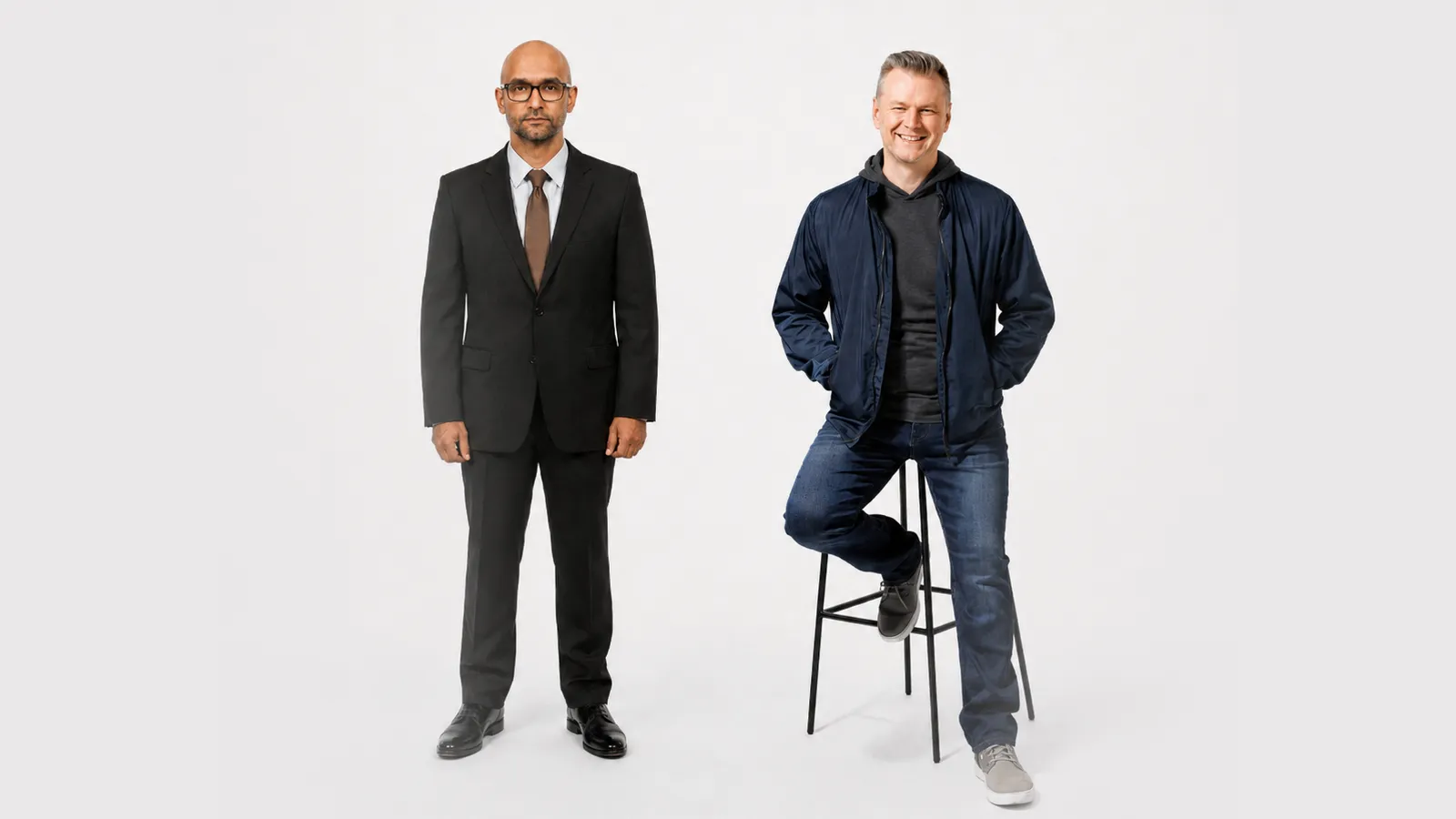
Two men stood against a white background. One was young, relaxed and dressed like he might spend the afternoon making something interesting. The other wore a suit, carried the posture of a committee meeting and looked as though he had already restarted twice that morning.
“I’m a Mac.”
“And I’m a PC.”
Apple’s “Get a Mac” campaign turned an operating system into a personality. It did not ask most people to understand processors, software architecture or security. It asked them to decide who they wanted to stand beside. The Mac was fresh, intuitive and creative. The PC was capable, respectable and somehow already tired.
The thought surfaced again in a conversation with Mohit Rajhans, as we tried to map those old characters onto today’s artificial intelligence platforms. https://omny.fm/shows/shane-hewitt-and-the-night-shift/icymi-mac-vs-pc-ai-edition-is-claude-the-rock-star-or-the-nerd/
ChatGPT walks in wearing the T-shirt. It is the approachable one, ready to write a story, make an image, help with code or turn a half-formed thought into something that looks possible. OpenAI has built it as a broad creative and working environment, which is precisely why so many people begin there. It feels less like operating machinery and more like starting a conversation.
Claude arrives dressed more formally. It is thoughtful, restrained and deeply comfortable around code, research and long, complicated work. Anthropic increasingly presents Claude as the tool that plans carefully, works through larger technical problems and stays with difficult tasks. Claude may believe it is the Mac in this comparison, but it still has the energy of the very intelligent person who has read the entire manual and would quietly prefer that you had too.
Then Gemini appears in the loud plaid jacket.
For those who remember WKRP in Cincinnati, Gemini can sometimes feel like Herb Tarlek, the station’s relentlessly eager sales manager. He is charming enough, useful when you need him, and always standing slightly too close while pointing toward something else you might buy.
This is partly unfair. Google has spent decades organizing information, and Gemini’s connection to Gmail, Drive, Calendar, Docs and the rest of Google Workspace can be genuinely useful. The system can retrieve your information, connect tasks and help move work through an ecosystem many people already use every day.
That is also the point.
The comparison stops being a joke when we remember that these tools are not simply assistants with different personalities. They are products, built by companies with ecosystems, ambitions and preferred destinations. Each one makes certain actions feel natural. Each one quietly teaches us where to look, what to trust and where the next step should happen.
Gemini’s great strength is its orbit. Google already surrounds much of modern digital life, and Gemini can move among those familiar services with increasing ease. Convenience gathers everything closer.
An orbit, however, is not neutral simply because it is convenient.
The system does not have to trap you. It only has to make leaving feel unnecessary. It can answer from familiar sources, connect to familiar apps and suggest the next familiar action. The leash does not pull. It anticipates. It does not order you to stay. It simply makes staying feel like the most sensible thing to do.
“Gemini keeps you inside the orbit until you tell it not to. That is not a feature. That is a leash with good manners.”
This does not mean Gemini is uniquely manipulative, or that ChatGPT and Claude arrive without their own gravitational fields. Every platform has a posture. ChatGPT encourages broad experimentation inside an expanding set of tools. Claude rewards careful, structured work and increasingly deep technical delegation. Gemini invites the user into a connected Google life.
The responsibility is not to reject the orbit. It is to notice it.
AI literacy cannot be reduced to writing a clever prompt. It includes recognizing the business model standing behind the answer. It means asking what sources were favoured, what alternatives were ignored and whose ecosystem becomes stronger when the recommendation is followed.
Sometimes the best response is to interrupt the default.
Look outside the ecosystem. Compare the recommendation against an independent source. Ask the system what it has not considered. Ask it to challenge its first answer and search beyond the most obvious path. Convenience is valuable, but convenience should remain a choice rather than becoming the edge of our curiosity.
The old Apple ads made the characters obvious. Mac and PC stood in front of us, fully dressed for the roles they were playing. We understood the persuasion because we could see the costume.
Artificial intelligence is more intimate. Its personality arrives one sentence at a time, adapting to our language and gradually becoming part of how we work. The sales pitch no longer interrupts the program. It becomes the place where we ask the questions.
That is why choosing an AI cannot be only about which one feels smartest. We should also ask which habits it rewards, which world it keeps us inside and what kind of dependence becomes invisible when the experience is easy.
The best tool is not necessarily the one that gives us everything in one place. It may be the one we can use without forgetting that another place exists.
ChatGPT may be the Mac. Claude may be the PC. Gemini may be Herb Tarlek in a remarkable plaid jacket, offering to organize your life and showing you something on sale while he is there.
The joke is useful because it makes the posture visible.
The moment we can see the orbit, the leash becomes a choice.
Choosing the right AI tool is about more than which one feels smartest. Sourced from Shane Hewitt & the Nightshift, listen to the show, or subscribe to join the community for more honest talk on what nobody else says out loud.
Connect with Mohit Rajans at ThinkStart.ca
