


Author: Shane Hewitt
Published: August 18, 2026
I noticed it, and now I can’t unnotice it.
📌 In This Article
- How Canada’s own weather agency quietly shifted from “forest fire” to “wildfire” between 2017 and 2024
- Why heat dome, polar vortex, atmospheric river, and bomb cyclone all went mainstream in the same narrow window
Language and the way we talk about things has changed. I have been noticing it for a while, particularly with weather, but watching the coverage of the fires in British Columbia sent me down a rabbit hole.
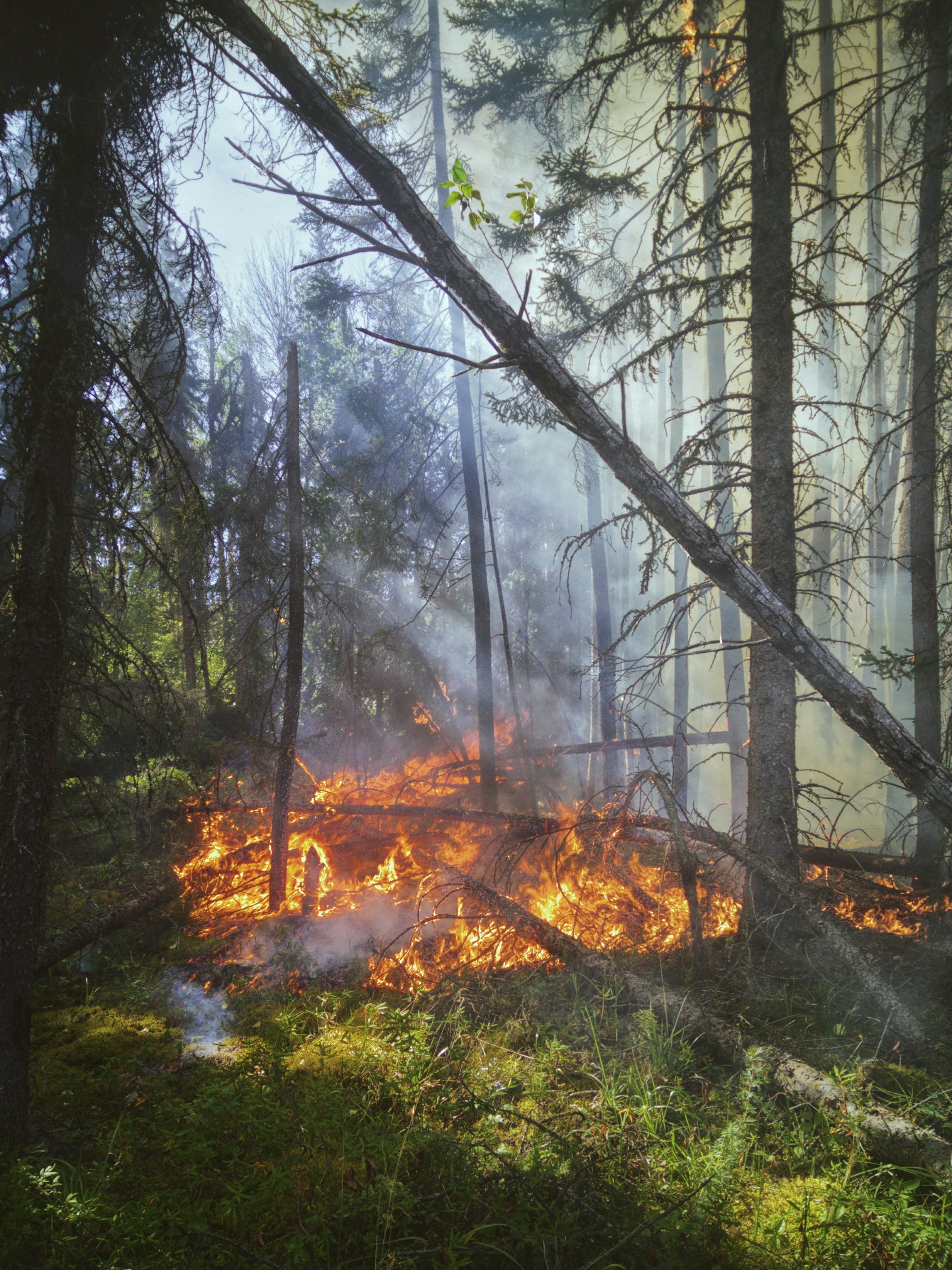
Wildfires.
Interesting word, isn’t it?
I grew up hearing about forest fires. There were grass fires. Brush fires. Sometimes just fires. Now, almost regardless of what is actually burning, the word we hear over and over is wildfire. So I started with what I thought was a very simple question: what is a wildfire, and why isn’t it a forest fire?
It turns out Canada has very specific definitions. According to the Canadian Interagency Forest Fire Centre’s official Canadian Wildland Fire Glossary, a wildfire is a naturally caused or unplanned human-caused fire burning natural fuels, including forest, brush, tundra or grass. An escaped prescribed fire can also become a wildfire. A wildland fire is the larger category and includes both wildfires and prescribed fires.
That distinction matters. A forest fire tells you what is burning. A grass fire tells you what is burning. A brush fire tells you what is burning. Wildfire tells you something different: the fire wasn’t planned.
And here’s something else I hadn’t really thought about. A wildfire can be contained. It can actually be officially classified as under control and still be a wildfire. Which is kind of strange when you think about the word.
A wildfire. Under control. Not very wild, at all.
And then what happens with arson? That fire was absolutely planned, just not by anyone who was supposed to be setting it. Canada still classifies that as a wildfire too.
That’s when the word itself started bothering me.
So when did we start saying it?
I went through Environment and Climate Change Canada’s annual Top Ten Weather Stories from 2017 through 2024, not because that represents every Canadian newspaper or television report, but because it gives us a consistent sample of how Canada’s own weather agency communicates with the public.
The shift isn’t neat, but it is visible.
In 2017, Environment and Climate Change Canada used both vocabularies. Its number-one story was British Columbia’s “wildfire season,” while its regional summaries still referred to Manitoba’s “forest fire season” and “forest fires in Alberta.”
In 2019, the government was still freely mixing forest fire and wildfire in the same document. The same thing happens in 2020, 2021, 2022 and 2023.
Across those eight annual reports, I found wildfire in every single year. Forest fire appears in six of the eight. By the 2024 report, wildfire is used repeatedly and forest fire doesn’t appear at all.
That doesn’t prove somebody issued an order to stop saying forest fire. It does show something simpler: our public vocabulary has moved.
Then I started looking at the rest of the forecast.
Remember the Pineapple Express?
For years, when that enormous stream of warm Pacific moisture arrived from around Hawaii, we heard about the Pineapple Express.
Now we hear atmospheric river.
Those aren’t perfectly interchangeable terms. A Pineapple Express is a particular atmospheric-river pattern. But what interested me wasn’t whether the meteorology was legitimate. It was when the language changed for the rest of us.
We don’t have to guess.
Environment and Climate Change Canada actually says it in its 2021 year-end weather review: atmospheric river had long been familiar to meteorologists, but 2021 was the year the term became familiar in Canada’s national mainstream. In that same explanation, the government notes that these systems are also called Pineapple Express storms.
That’s remarkable.
The weather phenomenon wasn’t new.
The words in our living rooms were.
“The weather phenomenon wasn’t new. The words in our living rooms were.”
Then there is heat dome. The Dictionary of Canadianisms on Historical Principles at UBC has actually tracked this one. It dates the introduction of heat dome into the mainstream Canadian lexicon to 2011, but says the expression remained relatively quiet in weather reporting throughout much of the 2010s. Then came the extraordinary heat of 2021, and suddenly heat dome was everywhere.
We still have heat waves. Environment and Climate Change Canada today actually defines extreme heat events as what are commonly known as “heat waves”. Yet listen to the difference between the two phrases.
Heat wave.
Extreme heat event.
Same heat?
Maybe.
Same feeling?
Not even close.
And then the words start piling up
A cold snap brings Arctic air south. Then polar vortex suddenly becomes part of everyday weather conversation. The phenomenon is old, but even the U.S. National Weather Service acknowledges that the term itself was only recently popularized. Canada’s own 2014 weather review was already describing that year’s bitter winter using the “polar vortex”.
A rapidly intensifying storm becomes a bomb cyclone.
That one has an especially interesting history. McGill meteorologist John Gyakum and MIT’s Frederick Sanders introduced the meteorological “bomb” terminology in a 1980 research paper. Decades later the expression escaped meteorology and became headline language. Oxford University Press now includes Gyakum in an entire chapter on “Coiner’s Remorse“, describing cases where people who helped create terms later developed reservations about the words or how others came to use them.
Then in May 2022, Ontario and Quebec were hit by an extraordinary straight-line windstorm and Canadians learned another word: derecho. Environment and Climate Change Canada later described it as “a storm type of which most people had never heard“.
Think about that for a second.
Most people had never heard the word.
Then millions of us did.
We also increasingly hear extreme heat, extreme precipitation, extreme weather, wildfire smoke, air quality advisories, flash flooding and hazardous conditions.
Not all of these words were invented recently. That’s not the point. Many are legitimate scientific or emergency-management terms that have existed for decades.
The change is that they are increasingly our words now.
There is a pocket here
When I first started looking, I thought I might be imagining it. Then I started putting the dates beside the words.
Polar vortex breaks through in public conversation around 2014. Canada’s fire language is already visibly mixing forest fire and wildfire by 2017. Bomb cyclone is becoming popular headline language around 2018. ECCC is using atmospheric river in its 2020 Canadian weather review, then explicitly says the term enters Canada’s national mainstream in 2021. Heat dome explodes into ordinary Canadian conversation that same year. Derecho arrives for most Canadians in 2022. By 2023, wildfire smoke and air quality are daily national stories, and in 2024 the federal government introduced a new Air Quality Advisory at the highest health-risk levels.
The dates aren’t perfect. Language doesn’t work that way. There was no Tuesday afternoon when we all received an email telling us to stop saying one thing and start saying another.
But there is a remarkably concentrated period, roughly 2017 through 2024, when a lot of specialist, hazard and risk language moved into everyday Canadian weather vocabulary. And 2021 and 2022 sit right in the middle of it.
Then I found one more thing.
There was an institutional shift happening at roughly the same time.
The World Meteorological Organization had been pushing weather agencies toward what it calls impact-based forecasting, moving beyond simply communicating what the weather will be and increasingly communicating what the weather will do, who could be affected and what the risks may be. An Environment and Climate Change Canada program evaluation also says Canada’s Meteorological Service was already undertaking work to support impact-based forecasting.
I’m not going to tell you that explains all of this, because I can’t prove that it does.
But I noticed it.
And now I can’t unnotice it.
None of this means the words are fake. The weather is real. The fires are real. Dangerous heat is real. People lose homes in floods and fires, and I’m not diminishing any of that.
I’m saying something much simpler.
The language changed.
We can see that it changed. In several cases, we can actually identify when unfamiliar technical language became mainstream language. We can see that it happened during a fairly concentrated period, and we can see that institutions were changing the way they thought about communicating weather and risk during roughly the same era.
What I can’t tell you is exactly who drove all of it.
I can tell you on the day the new Trudeau government was sworn in, a Canadian Press story carried by CTV News opened: “As signals go, Prime Minister Justin Trudeau has put a big green light on his Liberal government’s promised climate change agenda.” The story specifically pointed to the new Environment and Climate Change title as one of those signals.
Also on November 4, 2015: Justin Trudeau’s new cabinet was sworn in and Catherine McKenna was publicly introduced for the first time as the new Minister of Environment and Climate Change.
The next day, Environment Canada became Environment and Climate Change Canada. And the words were wedged into our formal vernacular. Perhaps it’s not clickbait after all, but instead a slow and well crafted subtle shift in the narrative.
Was it simply better scientific precision? Public safety? Climate advocacy? Government communication strategy? Media companies discovering which words get our attention? Algorithms discovering which headlines we click? Some combination of all of them?
I don’t know.
Let’s listen to the difference
Here is how I remember this kind of forecast sounding:
It’s been a hot, dry summer with several forest fires burning across our region. Heavy rain is expected this weekend, which could help with the fires, though some low-lying areas could see flooding.
Now take essentially the same weather forecast and run it through the vocabulary we use today:
Prolonged extreme heat under a persistent heat dome has elevated wildfire danger and contributed to worsening wildfire activity and smoke-related air quality concerns. Significant rainfall is expected this weekend, bringing relief from the extreme heat while creating potential for localized flash flooding and hazardous conditions.
Feels different when you say it that way, doesn’t it?
Up next – the SUPER el nino… which, the WMO says “Super” isn’t a formal classification or term. (formal categories are weak, moderate, strong and very strong) So who is pushing SUPER el Nino?
The words we use for wildfires didn’t happen by accident, and neither did this episode. Sourced from Shane Hewitt & the Nightshift, listen to the show, or subscribe to join the community for more honest talk on what nobody else says out loud.
